Since Nintendo and Sony gave up on the handheld scene (their last handhelds being the 3DS and PS Vita), we’ve reached a new era where many companies release many variants of handhelds that use similar chipsets. Companies such as Anbernic, Ayneo, Retroid, and Miyoo have released devices that use operating systems as varied as Linux, Android, and Windows. These handhelds vary in form, some being inspired by the hybrid Nintendo Switch, others by Sega consoles, PSP, and, more recently, clamshell consoles have been released.
The Anbernic RG DS sits at the less powerful end of the clamshell handheld spectrum. This lack of power is reflected in its price, as it almost qualifies as a budget handheld. The lack of power means 3DS emulation and above is practically out of the question. However, people want this device as a modern DS handheld. DS games can be emulated comfortably, but how does this console measure up in comparison with its competition? Read on for a review of the Anbernic RG DS.
Setup
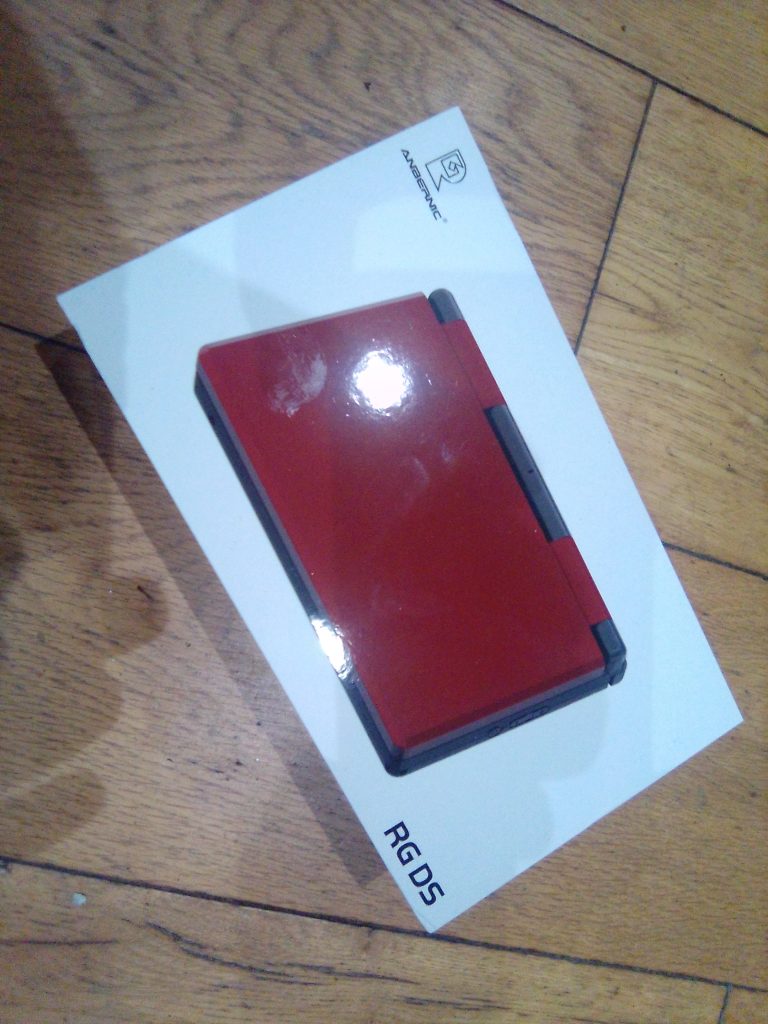
The Anbernic RG DS is an Android handheld. So, like many newer handheld consoles, it works just like an Android phone or Android tablet. This means that it is easy to download emulators from the Play Store or a browser to play your ROMs. I noticed that mine already had emulators installed when I first turned on the system (but no ROMs). However, you can also add front ends and custom firmware such as RockNix. Some custom firmware may give improved performance over stock firmware. I decided not to add any custom firmware, not yet anyway.
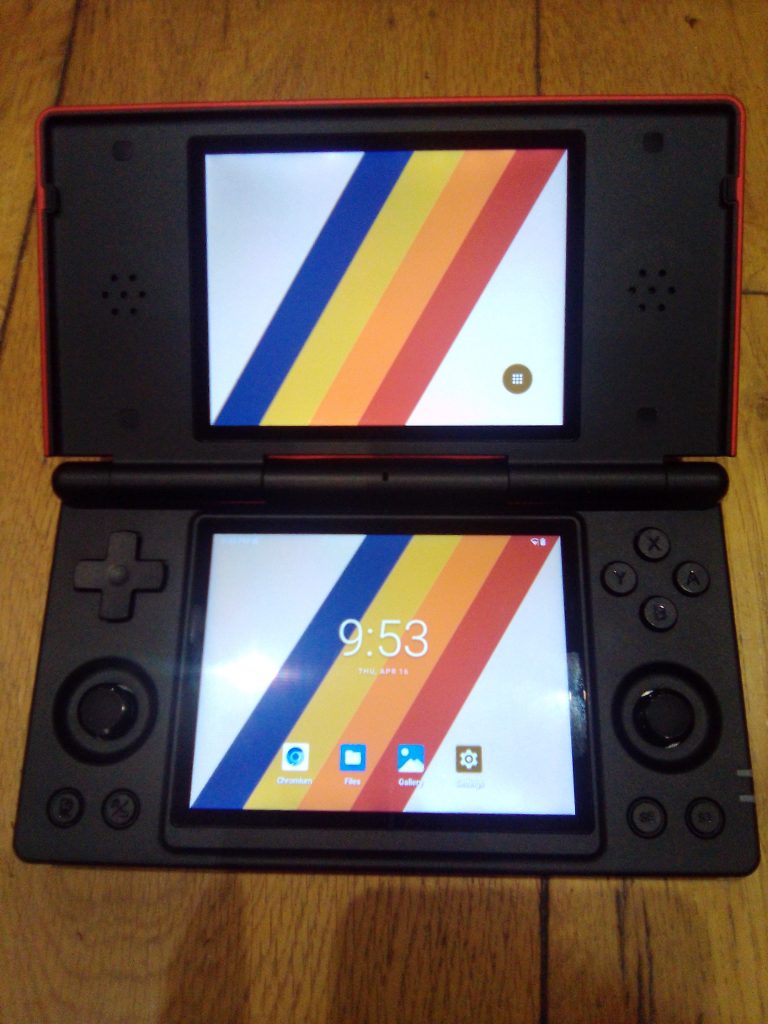
At the bottom left of the console, there’s a button that allows you to switch between screens. You can then play software independently on the top or bottom screen. When playing DS games, the system will automatically use both screens. Both the top and the bottom screens are touch screens on this handheld. It is a joy to just mess around on the touch screen using the stylus. The same was true of the original DS and DS Lite consoles. However, in other ways, the handheld isn’t as comfortable as those older systems.
Look and Feel
I was always happy with a regular 3DS rather than a 3DS XL (I never had a DS Lite). Maybe it is because of my average-sized hands, but the RG DS console doesn’t feel comfortable to hold. The corners of the console seem to dig into my palm. I couldn’t help but think that ergonomic bumps would have helped this. However, I know that the DS XL, which this is modeled off, and sold millions, didn’t have ergonomic bumps, so maybe I’m complaining about something that isn’t a widely held opinion. Also, the sticks are difficult to get a grip on. It almost feels like they are too low. The sticks themselves seem to be designed after the PS Vita sticks.
However, after spending more time with the console, these issues seemed less important. The face buttons and shoulder buttons are loud and somewhat reminiscent of their equivalents on the DS Lite. Likewise, the d-pad is clicky and low set (more akin to the d-pad on the original DS). Overall, I’d say that while I would criticise the positioning and ergonomics of the system, the buttons and d-pad are all high quality.
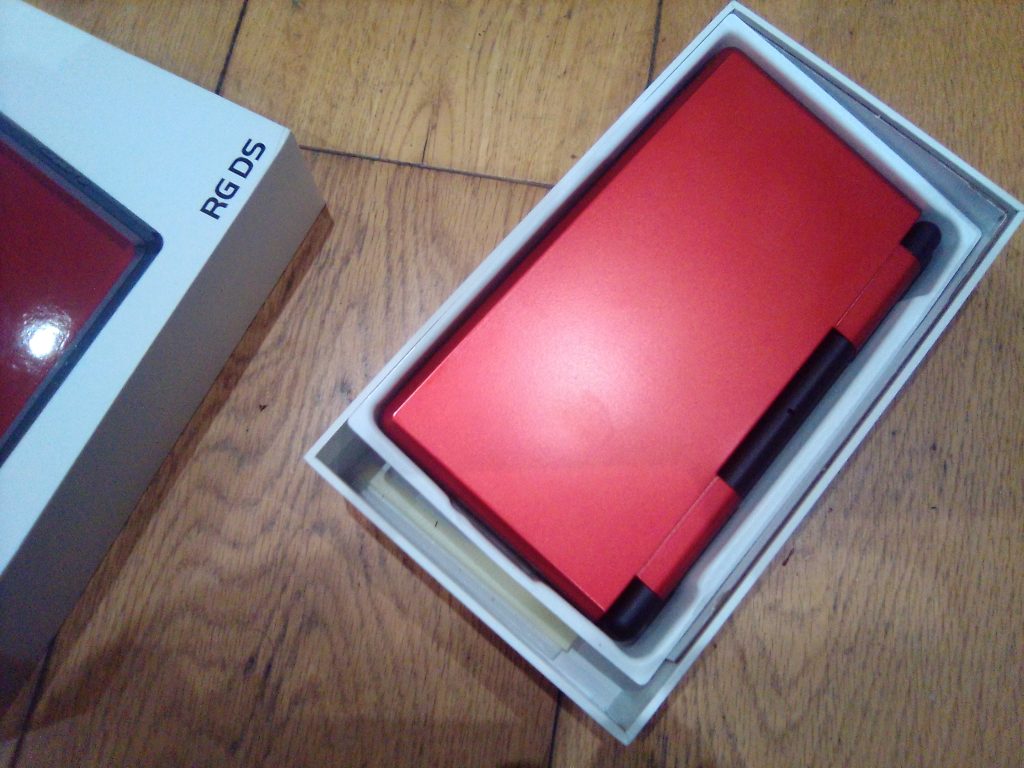
In terms of looks, the console comes in three color variants. The version I’m testing has a red top, with the rest of the console being matte black. The red portion has a hint of gloss in the finish. The console feels high-quality and has a good weight to it. The whole unit is bigger than I expected, and the screens are large. The console comes with a rather thick stylus that, unfortunately, has no slot on the console into which you can store it. The stylus makes clicking on applications easier compared to using your finger. If only there were a slot to store it.
Performance
In terms of actual games, I’ve played a few systems on the handheld. The N64 titles didn’t run as well as on my more powerful handheld (the Ayneo Pocket Air Mini), but they were definitely playable, and the dual sticks meant I could play some Goldeneye 007. GBA games that I played include Zelda: A Link to the Past, Double Dragon Advance, and The Lord of the Rings: The Two Towers. The good thing about playing single-screen games is that you can play the game on one screen while watching a walkthrough or guide on the other screen.
When playing DS games, I found the gameplay smooth. I played quite a bit of Metroid Prime Hunters, New Super Mario Bros, and Mario Kart DS. All ran very well. I did try to play one 3DS game using the Citra MMJ emulator. I tried Zelda: Ocarina of Time 3D. Unfortunately, the game would boot, but the top screen was black, and I couldn’t fix it. The system might technically be capable of 3DS emulation, but only light games will work. The system can play most PSP and Dreamcast ROMs.
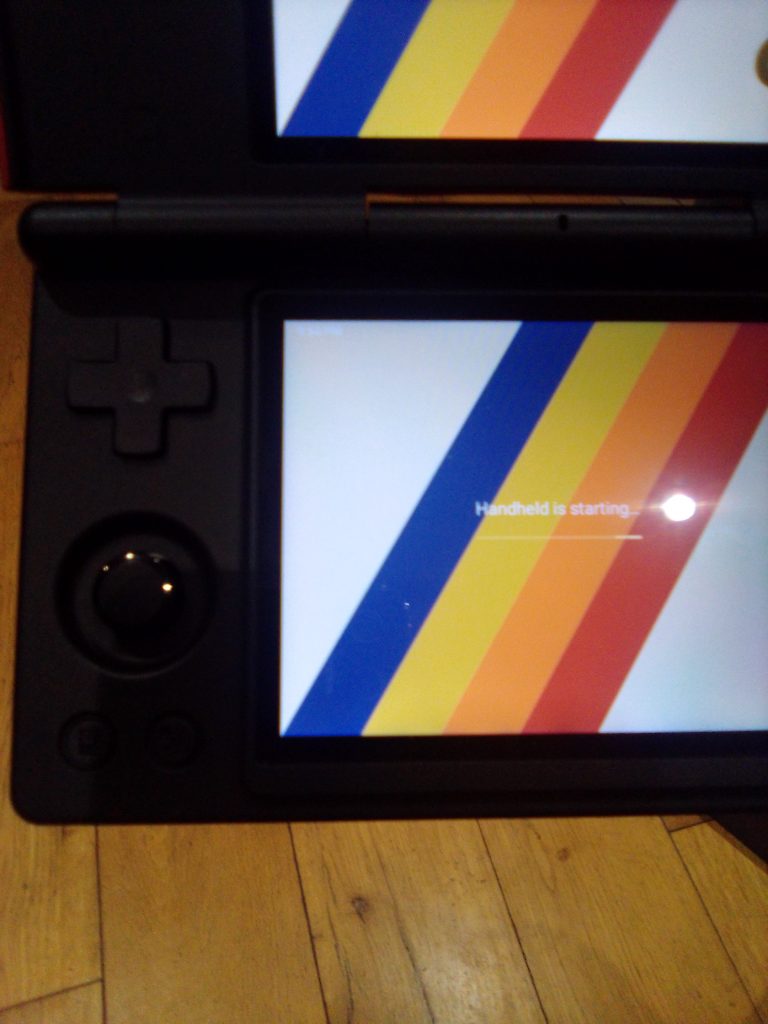
In terms of battery life, the Anbernic uses a 4000 mAh battery which will last about five hours when playing most games. Generally, when using the system with stock firmware, the system isn’t the fastest to go in and out of apps and games. However, it is playable, and the fact that you can use each screen independently is very cool.
Conclusion
To sum up, the Anbernic RG DS is trying to be a modern DS and succeeds in that it can play DS games authentically. However, the console has issues with ergonomics and is not powerful enough to run 3DS games. This is a huge disappointment, considering other clamshell emulation handhelds have proved what great emulation machines clamshell handhelds can be. Using the dual screens independently is a cool feature, and as the system uses Android as an operating system, players can use the device as a multimedia machine, not just a gaming machine.
The price of just over £100 is reasonable for what you get, but the RG DS is an underpowered and uncomfortable clamshell handheld. I would recommend the handheld to players who love the DS and want to play mainly DS games. However, if you want something to play more demanding games, save up and go for a clamshell handheld like the Ayn Thor.

BongoBongo123 is an avid Zelda fan who also likes the odd game of Smash. His interests in gaming are broad but he loves a good Metroidvania or action RPGs.