The homebrew Game Boy development scene is really growing and producing some ambitious titles as of late. Not every one of the games in this list are recent releases, but they are all titles that could be described as homebrew. Some of these games I’ve beaten, and others I have played a significant portion of. I thought it would be a fun exercise to release a possible series of features that highlight Game boy homebrew titles, as I haven’t seen any gaming site doing this online. It’s great that we have such a wealth of content to be playing for a handheld system that last had an official release around twenty five years ago. These titles can mainly be found on the indie gaming marketplace itch.io. Read on for your entertainment and Happy Gaming.
Opossum Country
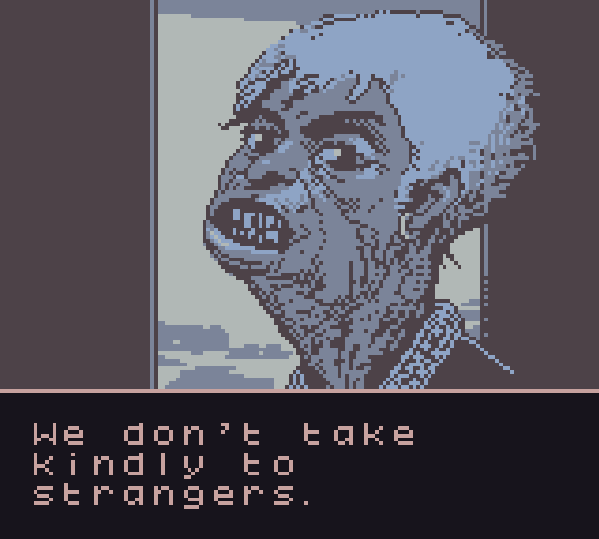
Homebrew horror games that derive their fear from narrative, pacing, and static images or visuals seem to be becoming more common on the indie gaming scene. Some of these titles blur the line between visual novel and video game. Oppossum Country fits into that category. While it is a short experience, which ends in less than an hour, the narrative keeps you engaged, and the creepy world that is built feels realistic, to an extent. There is a desire to find out the answers to the mysteries of what is happening and the developer knows how to shock, and build tension.
Still images are used and the player guides a sprite-based character around a map while you interact with objects with the A button. I don’t want to ruin the story but I will say that Oppossum Country is a creepy experience and well worth the download (whether you’ve paid a small amount of money or not) as it is one of the best made narrative-driven, visual novel – like adventures on Game Boy.
Melanie and the Magic Forest
Melanie and the Magic Forest blends Zelda- style trading sequences with good, relaxing music and charming characters to create a fun, cozy adventure. The title is short, and you can probably beat it in less than an hour. Your character has a journal that keeps track of the various trading sequences and there are numerous jokes, and anecdotes relating to 90’s and early 2000’s popular videogame culture.
The game is full of whacky characters, there is a race of anthropomorphic mushrooms, and generally the title provides good escapism while never having to pick up a sword or magic book. No combat means no need to worry about hit detection and other technical issues. The gameplay is the trading sequences. Overall the title can be thought of as a fun adventure in another realm where the main problems are potentially being late for dinner.

Swordbird Song: The Iron Owl Tower
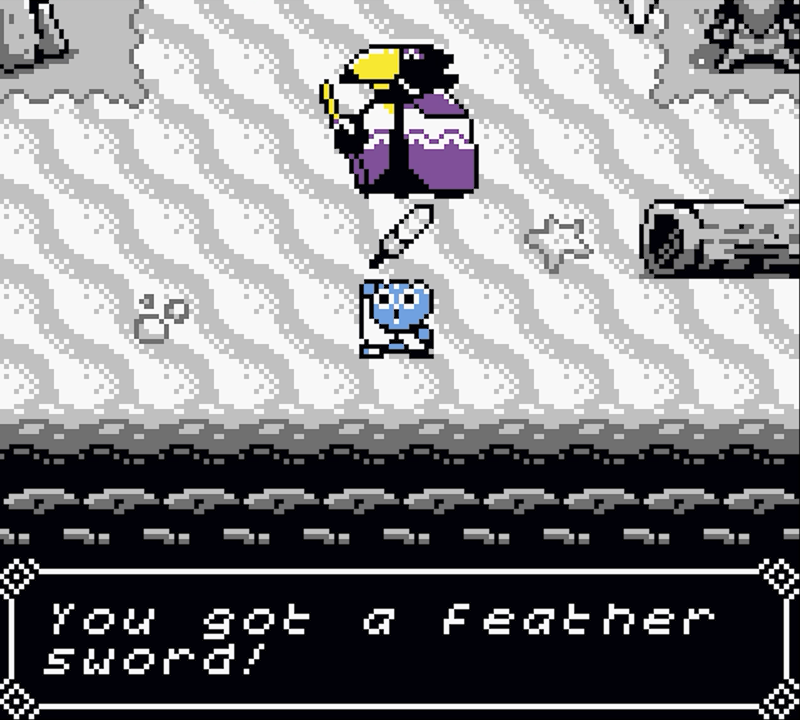
Swordbird Song: The Iron Owl Tower is a top-down, Zelda style adventure that has great production values and builds atmosphere like a game designed by a top studio, not a small two person indie developer. The game uses 8-bit or 16-bit sprite-style graphics and follows a gameplay pattern where exploration, combat, and puzzle-solving are key to progress. the story is also well done, and drives the player forward. This is done in a similar way to classic Zelda games. It particularly reminded me of the Minish Cap/Wind Waker era.
You are a small bird, marooned on an island. A huge avian friend arrives and explains to you that you have to climb a perilous tower to have any chance of escaping the island. What follows is a 3 hour adventure that blends gameplay and story very well. Swordbird Song is highly recommended.
Zoryad
The Game Boy, despite being 8-bit often used to get ports of 16-bit games that were very ambitious and made you forget that the system lacked power. Metroid 2, was one of those titles (being influenced by Super Metroid). Here, we have Zoryad, a game that plays like a cross of Metroid 1 and Metroid 2, and frustratingly, and similarly to those titles, has no map. The game starts off with the player character having many abilities which are then taken away and the player has to explore a huge labyrinth to reclaim them. This simple premise positions the player to begin a metroidvania experience where you have a huge area to explore.
While the game is not environmentally diverse, it sticks to metroidvania tropes throughout. However, there is no save feature, and at four hours in length, I advise playing with a save state feature. Zoryad is quite a bland metroidvania, but will scratch that itch, if you desperately want a homebrew metroidvania on Game Boy.

Labyrinth of the Dragon
Another game where save states are encouraged is Labyrinth of the Dragon. This title uses a medeval 8-bit aesthetic wrapped around a turn based Mother or Pokémon-style battle system. The turn based combat is very engaging, and I really wish that there was a proper save system as I think it would have been fun to be able to save your upgrades and the levels you’ve raised up, to come back to it at a later time. There are 8 floors of dungeons to get threw overall, and puzzles and exploration are other elements of the gameplay.
The title is a free to play game, and I’d advise anyone interested in turn based sword and shield type games to give this one a go. the combat and level up system is so enthralling that I wish it had been implemented in a more ambitious narrative, as it’s addictive and works well. The artists involved in the title obviously have talent, and it will be exciting to see what they come up with next.

Final Thoughts
These five titles show the potential of the Game Boy homebrew scene. Twenty five years ago the Game Boy had huge backing from developers and publishers. However, during that time, some of those developers weren’t always as passionate about developing games as some of the developers today. Not all of those developers grew up playing games, unlike now. Now that the Game Boy generation has grown up, we are seeing a flood of good indie games. This current era of passionate indie development is exciting for Game Boy fans and lets hope it continues. Happy Gaming.

BongoBongo123 is an avid Zelda fan who also likes the odd game of Smash. His interests in gaming are broad but he loves a good Metroidvania or action RPGs.
[…] to the third edition of Homebrew Review Round Up. This edition is full of high-publicity homebrew titles with three of the games featured being […]